
I have been up to Sajjangarh several times, but the place feels different during the monsoon.
The drive up is one reason. Once you leave the busier parts of Udaipur behind, the road starts climbing through the hills. After rain, the dry brown slopes around the city can turn surprisingly green. Clouds often hang low over the Aravallis, and on some days, you can see patches of mist moving across the hills.
Then you reach the Monsoon Palace.
From up there, Udaipur looks very different from the city you see at street level.
Sajjangarh Monsoon Palace
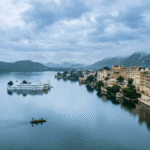
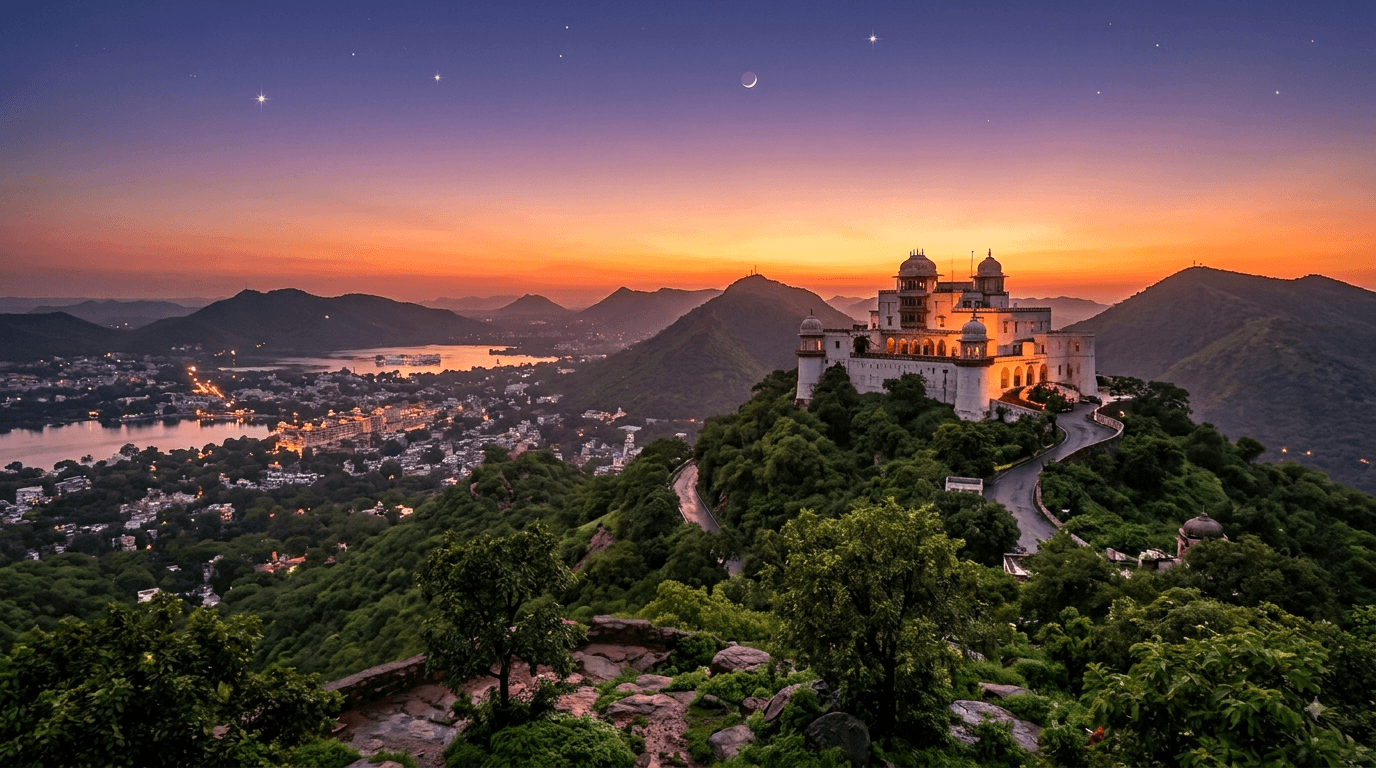
Most people know Sajjangarh as the Monsoon Palace. It stands on a high peak in the Aravalli hills and looks across Lake Pichola, Fateh Sagar Lake and large parts of Udaipur.
Maharana Sajjan Singh built the palace in the 19th century. The original plan was to use it as an astronomical centre, although that plan changed after his early death. The building later became associated with watching the monsoon clouds and was also used as a hunting lodge.
You can see why the hill was chosen.
On a clear day, the view stretches a long way. During the monsoon, the weather can change quickly. A hill that was clear a few minutes earlier may disappear behind cloud or mist.
The palace itself is made from white marble, with domes, arches, balconies and courtyards. Visitors cannot see all of the interior today, so most people come for the hilltop setting and the view.
That is really, where Sajjangarh gets its appeal.
Go for the Sunset
Sunset is the busiest time at Sajjangarh, and for good reason.
People usually find a place along the outer areas of the palace and wait for the sun to drop behind the distant hills. You can watch the city below slowly change as daylight fades. Lake Pichola and the other water bodies become harder to pick out, while lights begin appearing across Udaipur.
I would avoid arriving at the last minute.
The road up can take time, and you still have to get through the entry point and find somewhere to stand or sit. Reaching a little early also gives you time to look around instead of immediately searching for the best sunset spot.
There is another practical point to remember. Sajjangarh is inside the protected sanctuary area, so visitors are expected to leave after sunset. I prefer starting the descent without rushing, especially when there has been rain and the road is wet.
What I Like About the Place
For me, the best part of Sajjangarh is not actually the palace building.
It is the change in surroundings as you go higher.
Udaipur can be noisy. Traffic, horns and people are part of everyday life in the city. A few kilometers up the hill, the noise drops away. You start noticing the wind instead.
During the monsoon, I have stood near the palace and watched clouds move across the hills while the city below was still partly in sunshine. A few minutes later, the same view can look completely different.
That is something photographs do not always capture.
There Is Some Good Engineering Here Too
The palace was not built only with its appearance in mind.
One detail I find interesting is its old rainwater harvesting system. Water falling on the roofs and courtyards was directed into underground tanks and storage areas.
It makes sense when you think about where the palace stands. Getting regular supplies up a high hill would never have been simple, so collecting rainwater was a practical part of running the building.
It is easy to miss this sort of detail when everyone is looking out towards the sunset.
One Monsoon Evening I Remember
I remember one visit when the monsoon had just started.
The weather was unsettled, with patches of cloud moving across the valley. The stone around the palace was cool, and there was a light breeze coming up the hill.
For a while, the sun was hidden.
Then the clouds opened enough for the evening light to reach the hills. The western sky became orange and the white walls of the palace picked up some of that light.
By then, small lights were appearing in Udaipur below.
I stayed there for a while watching the view change. There wasn’t really anything to do except stand and look. Sometimes that is enough.
A Few Things to Keep in Mind
I would treat Sajjangarh as a late-afternoon visit rather than trying to fit it into a quick sightseeing schedule.
If sunset is your main reason for going, arrive with some time to spare. Check the current entry and closing arrangements before you leave, particularly during the monsoon, as conditions and timings can change.
The palace is inside a protected wildlife area, so the usual rules about littering and plastic restrictions matter here. Carrying less with you also makes the visit easier.
Moreover, take a little time on the way back down.
The sunset is usually what gets people up the hill, but the changing view of Udaipur as the evening gets darker is part of the experience too.